以太坊ABI:编码与解码
- DeCert.me
- 发布于 2025-12-13 10:39
- 阅读 3022
什么是ABI
大家应该很熟悉 API(Application Programming Interfaces),API 是一个接口,用它来访问某个服务,可以把API 理解两个软件彼此之间进行通信的桥梁。
ABI (Application Binary Interfaces),则是用来定义了智能合约中可以进行交互的方法、事件和错误,类似可以把 ABI 理解为与EVM 进行交互的桥梁。
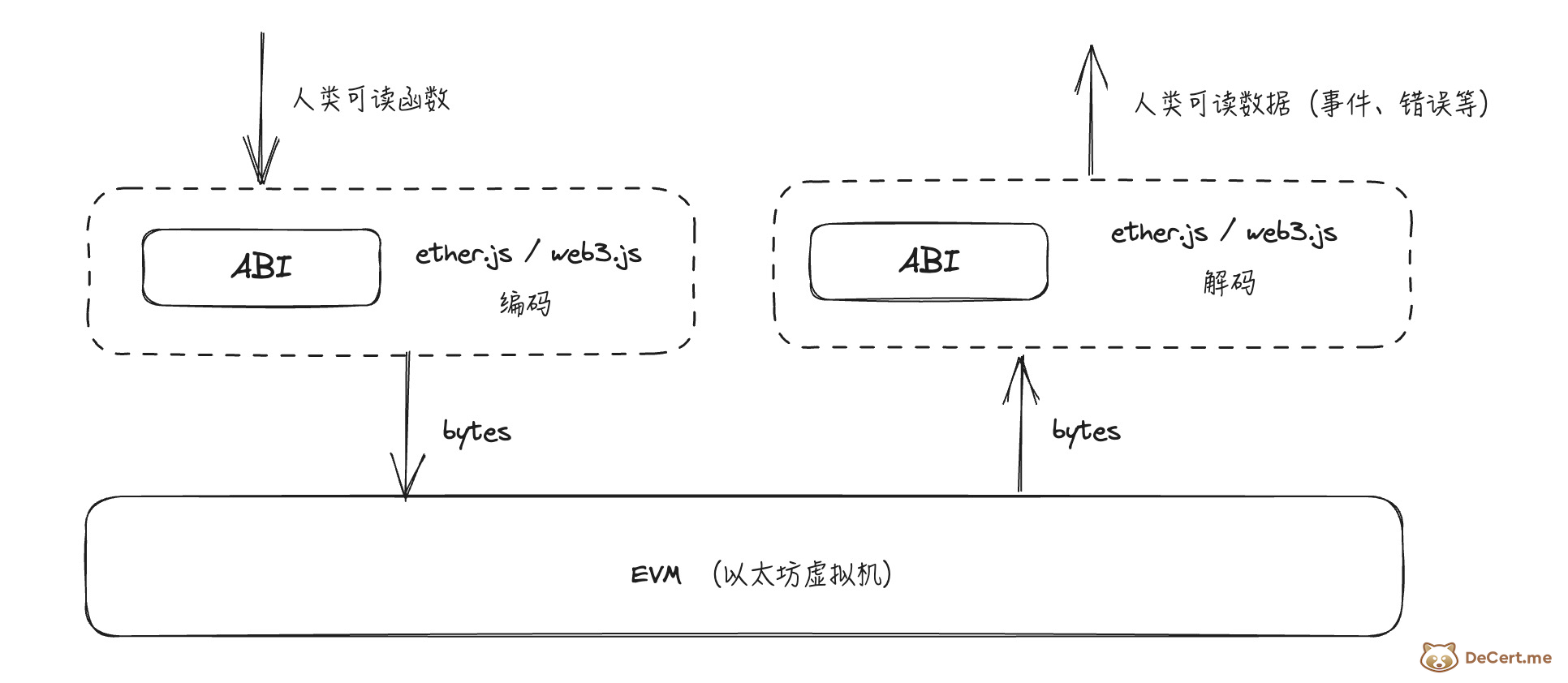
EVM 是以太坊虚拟机,和其他的机器一样,他们无法执行人类可读代码的, 只能够识别和运行二进制数据,这是一串由 0 和 1 所组成的数据流。因此在调用函数时,需要借助 ABI ,把人类可读函数转化为EVM可读的字节码。
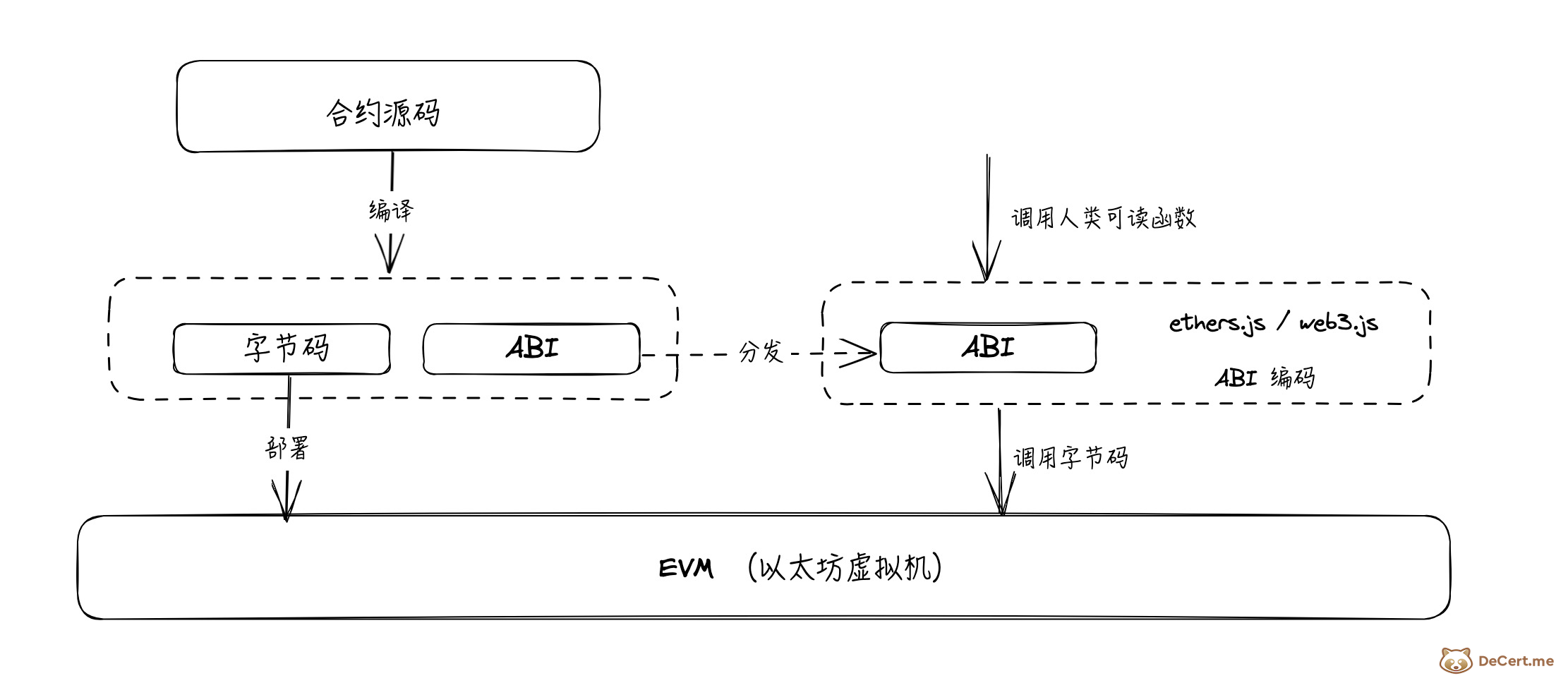
一句话总结:ABI 是 编码和解码规范,用来规范外部与 EVM 的交互,也可用于合约间的交互。
ABI 接口描述
在 Solidity 中,我们编译代码以后,会得到两个重要东西:bytecode(字节码) 和 ABI 接口描述。
参考 Remix IDE 一文,合约编译。
ABI 接口描述是 JSON 格式的文件,定义了智能合约中外部可以进行交互的方法、事件和可解释的错误。
例如,下面的 Counter :
contract Counter {
  uint public counter;
  address private owner;

  error NotOwner();
  event Set(uint _value);  // 定义事件

  constructor() {
    owner = msg.sender;
  }

  function set(uint x) public {
      if(owner != msg.sender)  revert NotOwner();
      counter = x;
      emit Set(x);

  }
}
编译之后生成的 ABI 为:
[
    {
        "inputs": [],
        "name": "NotOwner",
        "type": "error"
    },
    {
        "anonymous": false,
        "inputs": [
            {
                "indexed": false,
                "internalType": "uint256",
                "name": "_value",
                "type": "uint256"
            }
        ],
        "name": "Set",
        "type": "event"
    },
    {
        "inputs": [],
        "name": "counter",
        "outputs": [
            {
                "internalType": "uint256",
                "name": "",
                "type": "uint256"
            }
        ],
        "stateMutability": "view",
        "type": "function"
    },
    {
        "inputs": [
            {
                "internalType": "uint256",
                "name": "x",
                "type": "uint256"
            }
        ],
        "name": "set",
        "outputs": [],
        "stateMutability": "nonpayable",
        "type": "function"
    }
]
这是一个 JSON 格式的数组,每个对象定义了合约方法中可公开调用的方法(函数), 合约声明的事件及错误等。
以 set 函数为例:
    {
        "inputs": [
            {
                "internalType": "uint256",
                "name": "x",
                "type": "uint256"
            }
        ],
        "name": "set",
        "outputs": [],
        "stateMutability": "nonpayable",
        "type": "function"
}可以里面定义了type: 定义是函数、事件或错误等,name :表示函数名称、事件名称、自定义错误名称, inputs: 函数输入参数,outputs : 函数输出参数,
ABI JSON 的详细的规范可参考 Solidity 文档,这里不重复。
当我们要调用一个函数时,使用 ABI JSON 的规范的要求,进行编码,传给 EVM, 同时在 EVM 层生成的字节数据(如时间日志等),ABI JSON 的规范进行解码。
函数选择器详解
在深入了解 ABI 编码之前,我们需要先理解函数选择器(Function Selector)的概念。
什么是函数选择器
函数选择器是函数的唯一标识符,它是函数签名的 keccak256 哈希的前 4 个字节。每个公开的函数都有一个唯一的选择器。
pragma solidity ^0.8.0;

contract FunctionSelector {
    // 函数签名格式:functionName(paramType1,paramType2,...)
    // 注意:不包含参数名,不包含空格,不包含返回值类型

    function transfer(address to, uint256 amount) public returns (bool) {
        // transfer 的选择器是 0xa9059cbb
        // 计算方式:bytes4(keccak256("transfer(address,uint256)"))
        return true;
    }
}
计算函数选择器
有两种方式可以获取函数选择器:
方法1:手动计算
pragma solidity ^0.8.0;

contract SelectorExample {
    // 手动计算函数选择器
    function getTransferSelector() public pure returns (bytes4) {
        return bytes4(keccak256("transfer(address,uint256)"));
        // 返回: 0xa9059cbb
    }

    function getSetSelector() public pure returns (bytes4) {
        return bytes4(keccak256("set(uint256)"));
        // 返回: 0x60fe47b1
    }
}
方法2:使用 .selector 属性
Solidity 提供了更简洁的方式来获取函数选择器:
pragma solidity ^0.8.0;

contract SelectorProperty {
    function transfer(address to, uint256 amount) public returns (bool) {
        return true;
    }

    function getSelector() public pure returns (bytes4) {
        // 使用 .selector 属性直接获取
        return this.transfer.selector;
        // 返回: 0xa9059cbb
    }
}
使用选择器进行底层调用
函数选择器在底层调用时非常有用,特别是配合 call 使用:
pragma solidity ^0.8.0;

interface IERC20 {
    function transfer(address to, uint256 amount) external returns (bool);
}

contract LowLevelCall {
    // 方法1:使用 encodeWithSignature
    function callTransfer1(address token, address to, uint256 amount) public {
        bytes memory data = abi.encodeWithSignature(
            "transfer(address,uint256)",
            to,
            amount
        );

        (bool success, ) = token.call(data);
        require(success, "Transfer failed");
    }

    // 方法2:使用 encodeWithSelector
    function callTransfer2(address token, address to, uint256 amount) public {
        bytes memory data = abi.encodeWithSelector(
            bytes4(keccak256("transfer(address,uint256)")),
            to,
            amount
        );

        (bool success, ) = token.call(data);
        require(success, "Transfer failed");
    }

    // 方法3:使用接口的 selector 属性
    function callTransfer3(address token, address to, uint256 amount) public {
        bytes memory data = abi.encodeWithSelector(
            IERC20.transfer.selector,
            to,
            amount
        );

        (bool success, ) = token.call(data);
        require(success, "Transfer failed");
    }
}
函数选择器的应用场景
函数选择器在以下场景中非常重要:
-
底层调用时构造 calldata
- 使用
call、delegatecall、staticcall时需要构造正确的调用数据 - 函数选择器是 calldata 的前 4 个字节
- 使用
-
实现代理合约的函数路由
- 代理合约通过
fallback函数捕获调用 - 根据函数选择器将调用转发到实现合约
- 代理合约通过
-
跨合约调用的编码
- 动态调用其他合约的函数
- 根据业务逻辑选择要调用的函数
-
分析交易的函数调用
- 区块链浏览器通过函数选择器识别交易调用的函数
- 可以查询和反查函数选择器
函数签名的注意事项
在计算函数选择器时,函数签名必须遵循严格的格式:
✅ 正确的函数签名:
"transfer(address,uint256)"
"balanceOf(address)"
"approve(address,uint256)"

❌ 错误的函数签名:
"transfer(address to, uint256 amount)"  // 不能包含参数名
"transfer(address, uint256)"            // 不能有空格
"transfer(address,uint256) returns (bool)" // 不能包含返回值
示例:常见函数选择器
// ERC20 标准函数选择器
transfer(address,uint256)        → 0xa9059cbb
approve(address,uint256)         → 0x095ea7b3
transferFrom(address,address,uint256) → 0x23b872dd
balanceOf(address)               → 0x70a08231

// ERC721 标准函数选择器
safeTransferFrom(address,address,uint256) → 0x42842e0e
ownerOf(uint256)                 → 0x6352211e
ABI 编码
我们以调用 set() 函数为例,看看 ABI 是如何进行的,合约部署在 sepolia 网络,调用 set(10):

区块链浏览器交易记录如下:

调用 set()函数,经过 ABI 编码后,提交到链上的数据是: 0x60fe47b1000000000000000000000000000000000000000000000000000000000000000a

该编码数据是如何生成的呢?
它包含两个部分:
- 函数选择器(前 4 个字节)
- 参数编码
0x60fe47b1 是函数选择器, 它是 ABI 描述中函数的签名:set(uint256) 进行 keccak256 哈希运算之后,取前4个字节:
bytes4(keccak256("set(uint256)")) == 0x60fe47b1关于函数选择器的详细说明,请参考前面的函数选择器详解章节。
参数部分 10 的十六进制是 a, 然后扩展到 32个字节, 参数编码细节可以参考文档 应用二进制接口说明 。
大部分时候,我们不需要了解详细的编码规则,Solidity / web3.js / ethers.js 库都提供了编码函数,例如在 Solidity 中,可通过以下代码获得完整的编码:
// 编码函数及参数
abi.encodeWithSignature("set(uint256)", 10)

// 编码参数
uint a = 10;
abi.encode(a);   // 0x000000000000000000000000000000000000000000000000000000000000000a
Solidity 编码函数
Solidity 中有 5 个函数:abi.encode, abi.encodePacked, abi.encodeWithSignature, abi.encodeWithSelector 及abi.encodeCall 用于编码。
我们可以在 Chisel 里演练这几个编码函数,Chisel 是Foundry 提供的 Solidity 交互式命令工具
abi.encode
encode() 方法按EVM标准规则对参数编码,编码时每个参数按32个字节填充0 再拼在一起,当与合约交互时需要编码参数时,就使用该方法。
// 单个参数
uint a = 10;
abi.encode(a);   // 0x000000000000000000000000000000000000000000000000000000000000000a

uint8 s = 2;   // 占一个字节
abi.encode(s);  // 0x0000000000000000000000000000000000000000000000000000000000000002

address addr = 0xe74c813e3f545122e88A72FB1dF94052F93B808f;
abi.encode(addr); // 0x000000000000000000000000e74c813e3f545122e88a72fb1df94052f93b808f

// 多个参数
abi.encode(addr, a);  // 0x000000000000000000000000e74c813e3f545122e88a72fb1df94052f93b808f000000000000000000000000000000000000000000000000000000000000000a

bool b = true;
abi.encode(addr, a, b);  // 0x000000000000000000000000e74c813e3f545122e88a72fb1df94052f93b808f000000000000000000000000000000000000000000000000000000000000000a0000000000000000000000000000000000000000000000000000000000000001
若是动态类型的数据,编码会更加复杂:
// 动态类型的数据
uint[] memory arr = new uint[](2);
arr[0] =  1;
arr[1] = 2;

abi.encode(addr, a, b, array) // 0x000000000000000000000000e74c813e3f545122e88a72fb1df94052f93b808f000000000000000000000000000000000000000000000000000000000000000a00000000000000000000000000000000000000000000000000000000000000010000000000000000000000000000000000000000000000000000000000000080000000000000000000000000000000000000000000000000000000000000000200000000000000000000000000000000000000000000000000000000000000010000000000000000000000000000000000000000000000000000000000000002参数的编码规则,可查看这里
abi.encodePacked
encodePacked 称为紧密编码,和 encode() 方法不同,参数在编码拼接时不会填充0, 而是使用实际占用的空间然后把各参数拼在一起,如果编码结果不是32字节整数倍数时,再末尾依旧会填充0)。例如在使用EIP712 时,需要对一些数据编码,就需要使用到 encodePacked 。
// 单个参数
uint a = 10;
abi.encodePacked(a);   // 0x000000000000000000000000000000000000000000000000000000000000000a

uint8 s = 2; // 占一个字节
abi.encodePacked(s);  // 0x0000000000000000000000000000000000000000000000000000000000000002

address addr = 0xe74c813e3f545122e88A72FB1dF94052F93B808f;
abi.encodePacked(addr);

bool b = true;
// 多个参数
abi.encodePacked(addr, s, b);  // 0xe74c813e3f545122e88a72fb1df94052f93b808f020100000000000000000000
abi.encodeWithSignature
对函数签名及参数进行编码,第一个参数是函数签名,后面按EVM标准规则对参数进行编码,这样就可以直接获得 调用函数所需的 ABI 编码数据。
abi.encodeWithSignature("set(uint256)", 10) // 0x60fe47b1000000000000000000000000000000000000000000000000000000000000000a

// 参考上方 addr, s, b 的定义
abi.encodeWithSignature("addUser(address,uint8,bool)", addr, s, b) // 0x63f67eb5000000000000000000000000e74c813e3f545122e88a72fb1df94052f93b808f00000000000000000000000000000000000000000000000000000000000000020000000000000000000000000000000000000000000000000000000000000001
abi.encodeWithSelector
它与abi.encodeWithSignature功能类似,只不过第一个参数为4个字节的函数选择器。
关于如何计算和使用函数选择器,请参考函数选择器详解章节。
例如:
abi.encodeWithSelector(0x60fe47b1, 10);
// 等价于
abi.encodeWithSelector(bytes4(keccak256("set(uint256)")), 10); // 0x60fe47b1000000000000000000000000000000000000000000000000000000000000000a

abi.encodeWithSelector(0x63f67eb5, addr, s, b);
// 等价于
abi.encodeWithSelector(bytes4(keccak256(""addUser(address,uint8,bool)")), addr, s, b) // 0x63f67eb5000000000000000000000000e74c813e3f545122e88a72fb1df94052f93b808f00000000000000000000000000000000000000000000000000000000000000020000000000000000000000000000000000000000000000000000000000000001
abi.encodeCall
encodeCall 可以通过函数指针,来对函数及参数编码,在执行编码时,执行完整的类型检查, 确保类型匹配函数签名。例如:
interface IERC20 {
    function transfer(address recipient, uint amount) external returns (bool);
}

contract EncodeCall {
    function encodeCallData(address _to, uint _value) public pure returns (bytes memory) {
        return abi.encodeCall(IERC20.transfer, (_to, _value));
    }
}
ABI 解码
解码是编码的”逆过程“, 区块链浏览器为何能把我们提交给链上的 0x60fe47b1000000...0a 显示为函数set(uint256 x), 就是对数据进行了解码。
准确来说,仅能对参数进行解码,函数选择器的计算过程中, 使用了 keccak256 哈希运算,哈希是不可逆的。
但当我们开源合约代码之后, 区块链浏览器可以计算出所有函数的函数选择器,从而可以通过函数选择器匹配对应的函数签名。
ABI 解码一个重要的使用场景是,解析交易中的事件日志。
在刚才的交易中,链上记录了如下日志:
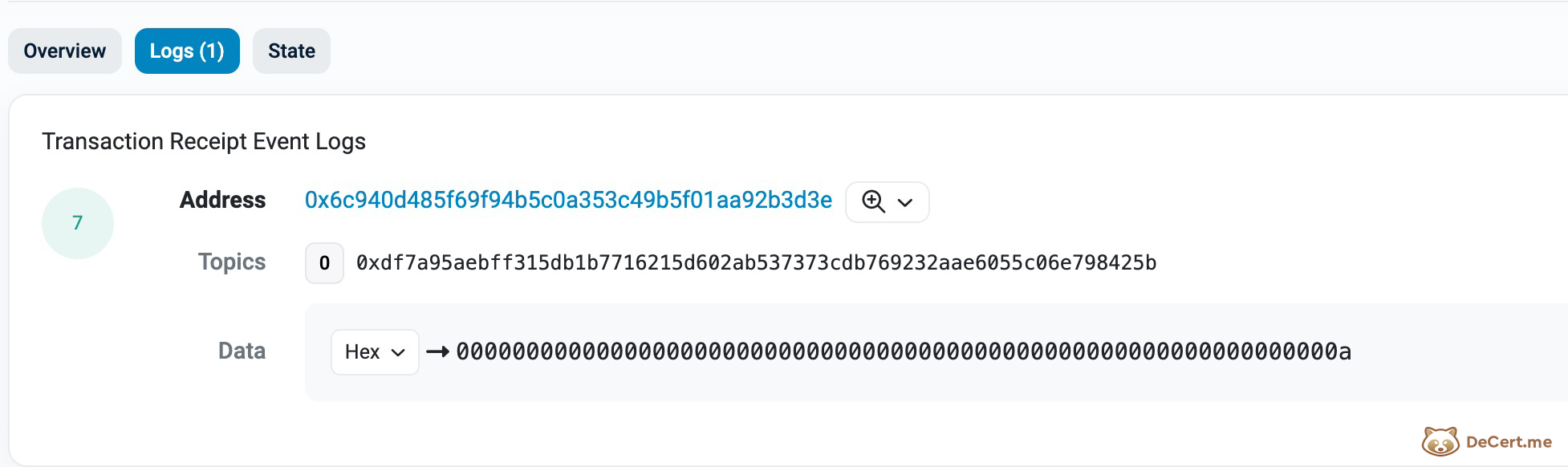
日志的包含Topics 和 Data 两部分,我们该如何获知其表示的含义呢?
其实,Topics 的第一个主题是事件签名的 Keccak256 哈希,在上面 ABI JOSN 描述中,包含 Set 事件的描述,对应的事件签名是 Set(uint256), Keccak256 哈希结果是主题值。
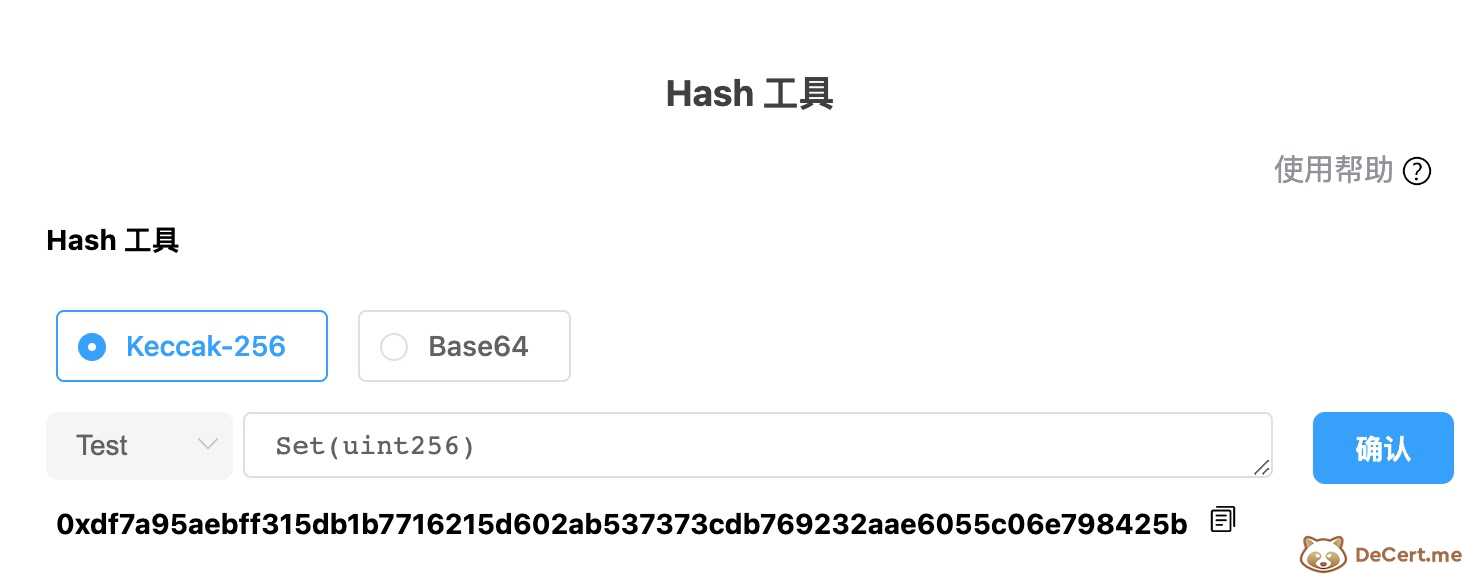
通过匹配,我们就可以知道 EVM 产生的该条日志是由 Set(uint256) 事件生成, 从而根据事件的参数列表解析日志数据。Solidity / web3.js / ethers.js 库都提供了解码函数, 例如:
// solidity decode
(x) = abi.decode(data, (uint));

// ethers.js
const SetEvent = new ethers.utils.Interface(["event Set(uint256 value)"]);
let decodedData = SetEvent.parseLog(event);
ABI 编解码可视化工具
ChainToolDAO 开发了几个可视化工具,帮助我们来编解码。
- 函数选择器的查询及反查 :https://chaintool.tech/querySelector
- 事件签名的 Topic 查询:https://chaintool.tech/topicID
- Hash 工具提供Keccak-256 及 Base64:https://chaintool.tech/hashTool
- 交易数据(calldata)的编码与解码: https://chaintool.tech/calldata
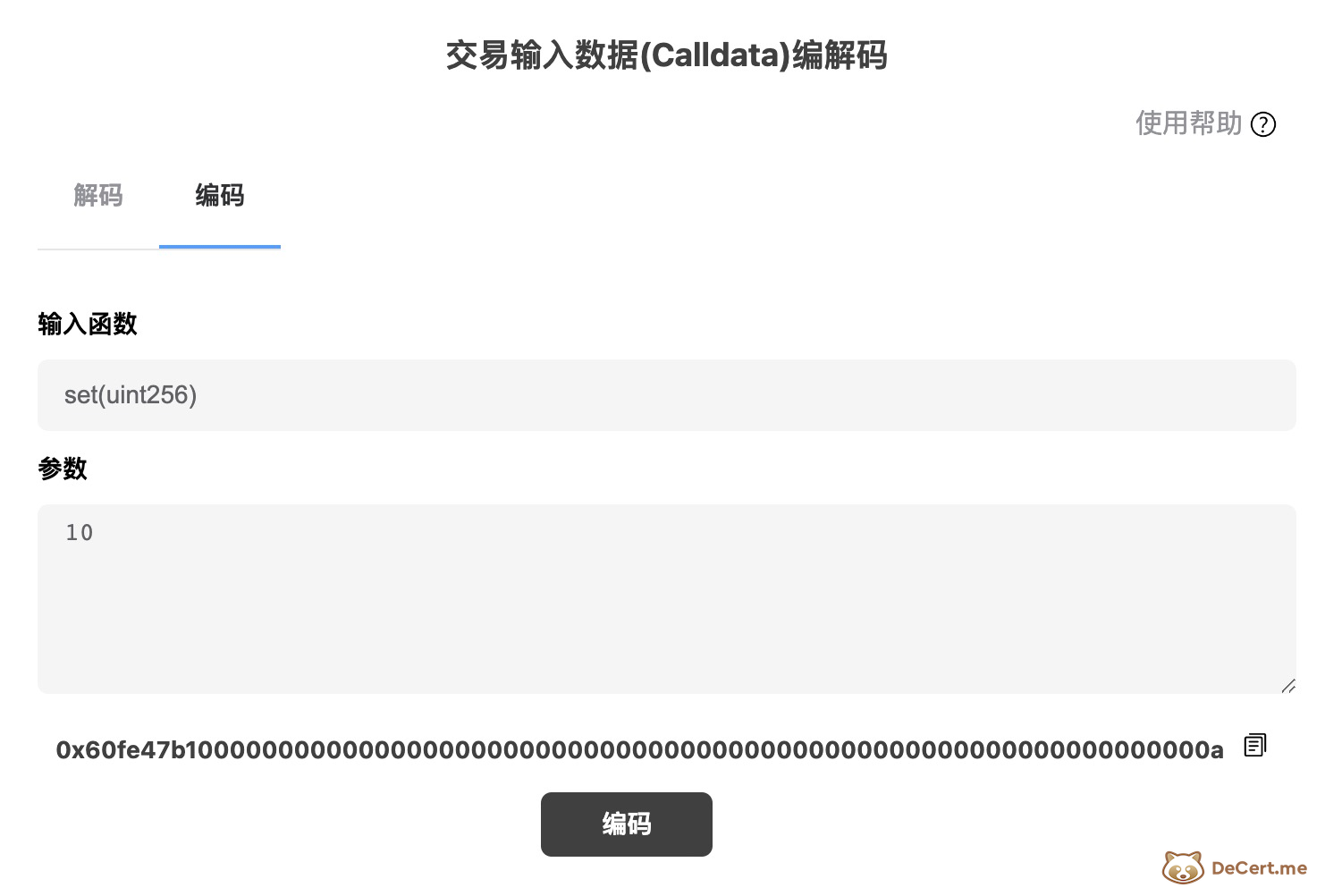
小结
本文,我们学习了 ABI 的概念,ABI 是一个编解码的规范,是人类可读信息与以太坊虚拟机执行二进制数据的桥梁。
在理解 ABI 之上,分别介绍了 ABI 接口描述,ABI 编码与ABI 解码。
来 DeCert.me 码一个未来,DeCert 让每一位开发者轻松构建自己的可信履历。
DeCert.me 由登链社区 @UpchainDAO 孵化,欢迎 Discord 频道 一起交流。
本教程来自贡献者 @Tiny熊。


